
Luminations
a glimpse of my authentic life
Images Of Remembered Passion Revisited
Audiobooks
Memoirs
Dance Photography
I’ve been reading a lot lately, mostly audiobooks. Wanting to stretch the four credits left on my Audible account that have to last me until renewing in November, I often borrow from the Front Range Digital Library.
Books I’ve recently read by ear and would recommend include:
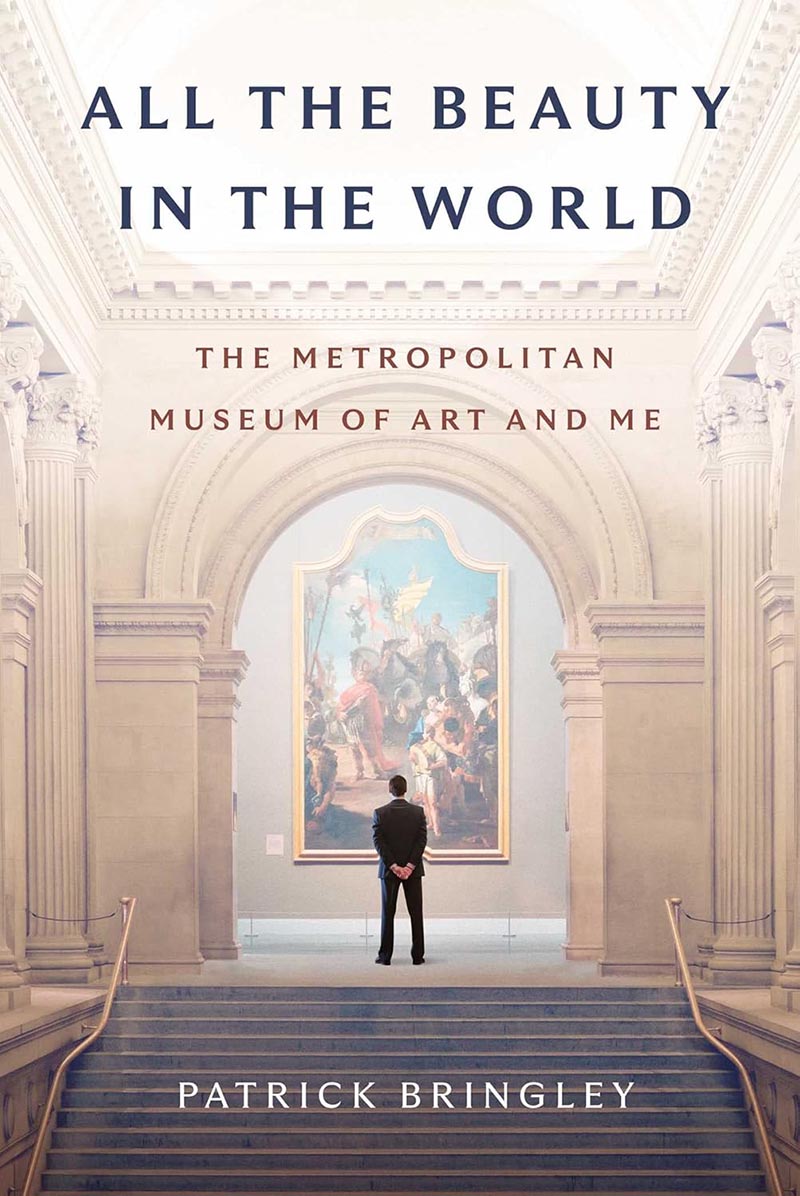
* All The Beauty In The World: The Metropolitan Museum of Art and Me by Patrick Bringley
* Remarkable Creatures by Tracy Chevalier
* Great Big Beautiful Life by Emily Henry
* The Correspondent by Virginia Evans
* Mad Honey by Jodi Picoult & Jennifer Finney
* We All Live Here by Jojo Moyes
Books I wanted to like, but didn’t, include:
* The Loneliness of Sonia and Sunny by Kiran Desai
* Audition by Katie Kitamura
* Judge Stone by James Patterson & Viola Davis
One of the audiobooks that popped up on my library search was a memoir that unexpectedly rekindled thoughts of my love of the performing arts. The book is The Third Gilmore Girl: A Memoir by Kelly Bishop, who was also the narrator. For those who don’t know who Kelly Bishop is, for one thing, she was the original Sheila in the 1975 Broadway production of A Chorus Line for which she won a Tony award. And she had a remarkable career in every facet of performance from Broadway chorus dancer through Broadway actor and singer (A Chorus Line; Anything Goes) to film (Dirty Dancing), and television.
You might know her best as Loralei’s mother and Rory’s grandmother in the long-running 2000-2007 TV sitcom Gilmore Girls written by the incomparable Amy Sherman-Palladino. I often thought that Amy Sherman-Palladino’s dialogue, when it was meant to be witty, although censored for broadcast television, had moments as speedy and nuanced and quirky as a Robin Williams monologue. And when it was meant to be serious, it came off right on the mark.
It was decades after the series had ended its seven year run on mainstream TV that I came upon Gilmore Girls. By then, it had been picked up by Netflix, and I admit I got hooked and binge-watched all seven seasons. I also admit that I did it more than once. I hardly turn on my television these days, but in the past, I appreciated TV writers with original brilliance in both quirky comedy as well as serious drama performed by outstanding actors. For example, there was David E. Kelley’s Ally MacBeal (1997—2002). And, of course, Aaron Sorkin’s The West Wing (1999—2006). Although I confess that not being “political” I didn’t always understand exactly what was happening on The West Wing, I actually watched all seven seasons at three different times over the years.
As for the live performing arts, I’ve came to enjoy and appreciate reading about the authentic journeys of people in that arena. Dance, theatre, music, film have all been a source of great upliftment to me since my teenage years. In high school in The Bronx, we were offered $1 student tickets to Broadway shows and other performances. I remember going to see the Bolshoi Ballet with Maya Plisetskaya in 1962 (although I don’t remember whom I went with) at the old Metropolitan Opera House when I was sixteen. I had to take an elevator up to my seat in the last balcony. But there, on stage, was the graceful (although very small) swan-like presence of the Bolshoi’s Prima Ballerina Assoluta.
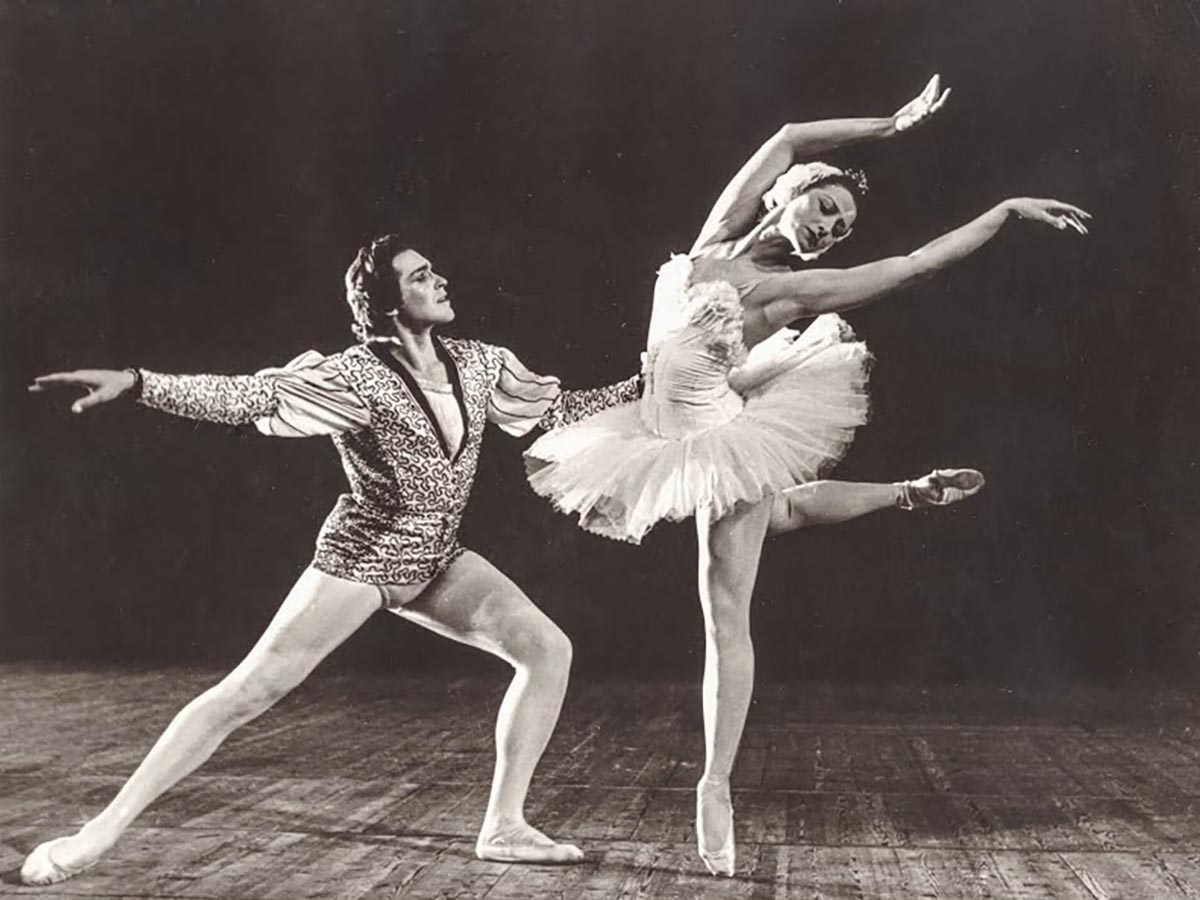
Maya Plisetskaya as Odette in Swan Lake
And as a senior, I and three other close friends would often go together to the theatre, meeting for dinner and drinks at a steakhouse in Manhattan, Mr. Richard Premium Steaks, which we called Mr. Richard’s. Although we were seventeen, we appeared sophisticated enough never to be considered underage. Among the plays we saw were The Sound of Music, Calculated Risk, Milk and Honey, A Funny Thing Happened On The Way To The Forum. Afterwards, we shared a cab back to The Bronx, the driver dropping each of us off at our separate addressses.
Two other audiobook memoirs I loved were Barbra Streisand’ forty-eight hour conversational reading of My Name Is Barbra, the retelling of her extraordinary life. And The Swans of Harlem: Five Black Ballerinas, Fifty Years of Sisterhood, and Their Reclamation of a Groundbreaking History by Karen Valby. An amazing rendering of “a legacy erased,” The Swans of Harlem includes the story of the beginnings of the first black classical ballet company Dance Theatre of Harlem, one of the many great companies I had the privilege of seeing perform in the 1980’s, when Arthur Mitchell was still the Artistic Director.
Reading both of these books, together with The Third Gilmore Girl, brought up memories of my at times near obsession with dance. At twenty-nine, I began seriously taking adult beginning ballet classes twice a week. In eight months, I had progressed to intermediate level, taking four classes a week, although it hurt like hell and I could never do a pirouette en dehors to save my life. I was then invited to advanced level, but I stayed at intermediate, continuing to take classes on and off until I was forty-five. I also began writing freelance on dance in South Florida—a review here, an article there. For a short time, I wrote a column for the Ft. Lauderdale News/Sun Sentinel called Divertimento: Understanding the Ballet. In it, I educated readers about upcoming dance performances by companies such as American Ballet Theatre, New York City Ballet, The Houston Ballet. I also began collecting dance videos and amassed an impressive collection which was bought, bartered for, bootlegged, and included tapes smuggled by a friend and Russian ballet obsessive out of the then Soviet Union. And I became interested in dance photography. Thinking of this reminded me of a short piece I wrote on a much earlier incarnation of my blog in 2013 about my love of Max Waldman’s amazing dance images. Since I don’t think even five people ever actually read it, I thought I’d share it here.
Images Of Remembered Passion
You know how it is when a passing comment by a friend triggers a thought that leads to another thought that culminates in a long forgotten memory? I had that happen to me the other day. It started with mention of an auction house here in Asheville, NC, which inspired thoughts about things of great beauty, which was enhanced by an image posted on Facebook of NYC Ballet’s Vienna Waltzes, which led me to think of Max Waldman, whose incredible dance photography had been such an inspiration to me decades ago.
For a while, in the 1970’s and 80’s, I wrote freelance on dance for a few South Florida publications. I also developed a passion for dance photography. I was already an ardent admirer of Martha Swope’s rehearsal and stage photos when I was introduced to Max Waldman’s art. I was blown away. Taken with black and white film in a very small studio, the photos were impossibly alive, giving the illusion of capturing the finest moment in the midst of movement that seemed to span a vast amount of time and space, or the most intimate expression coaxed from the depth of a soul. And all the photos utilized a grainy texture with accentuated light and shadow, which ironically enhanced their elegance. It made one feel as if she were being allowed a gossamer glimpse into the etheric and often private world behind the veil.
As I graced my walls with Waldman prints, I felt the desire to try my own hand at photographing dancers. I had no illusions of grandeur, but I often liked, if at all possible, to experience firsthand those art forms I most enjoyed. I craved a larger understanding of and appreciation for what might be involved. I was already taking both studio and performance photos of a pre-professional company of exceptionally gifted young dancers whose artistic directors were close friends of mine. But I had hoped for an opportunity to shoot—informally and just for my own practice—a professional company.
One day, in the early ’80’s, the goddess smiled, and with the help of my editor at the Fort Lauderdale News/Sun Sentinel, I got permission to photograph closed rehearsals of American Ballet Theatre during their Miami season—both Raymonda Variations, and ABT’s premier of Grand Pas Romantique, Fernando Bujones’s first choreographic attempt.
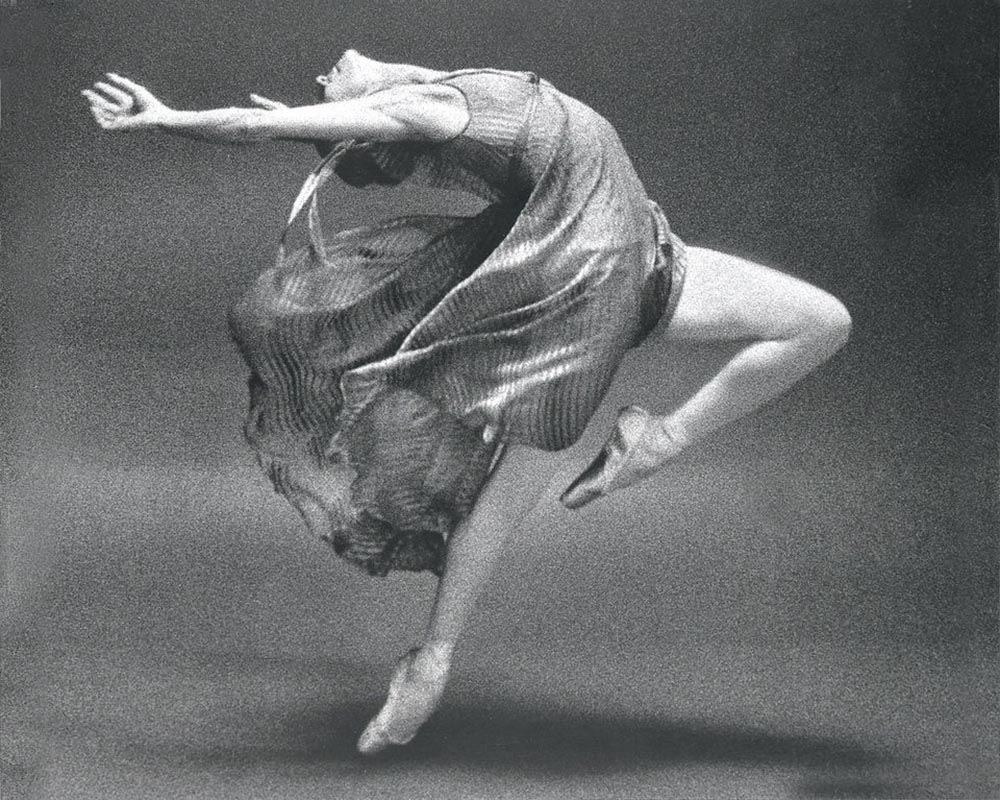
Natalia Makarova in Other Dances Photograph by Max Waldman
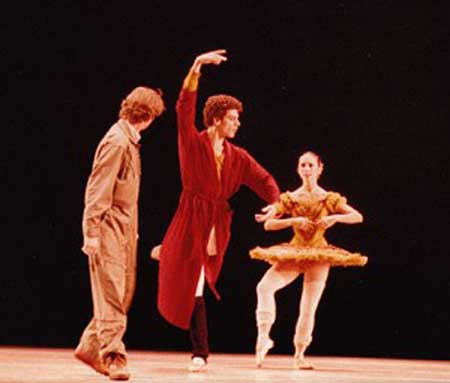
Terry Orr, Fernando Bujones, Marianna Tcherkassky rehearsal Grand Pas Romantique Photograph by Rachelle Rogers
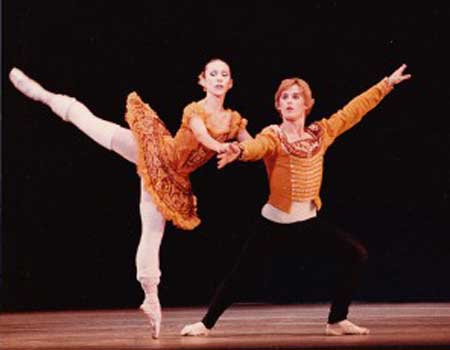
Marianna Tcherkassky and Danilo Radojevic rehearsal Grand Pas Romantique Photograph by Rachelle Rogers
I entered the then Miami Beach Theater of the Performing Arts, showed my pass, and proceeded to the auditorium. I set up my tripod in the aisle to the right of center stage, at about the tenth row, and attached my camera and lens. I had to stay close, since my equipment was limited to what I could afford, which meant limited long range lens capacity. The rehearsal for Raymonda was already in progress. Mikhail Baryshnikov, not dancing that year, was Artistic Director of ABT at the time. He and two other assistants viewed the dancers from chairs at the front of the stage. The conditions were less than perfect. The rehearsal was more of a run through and final tweaking than an all-out performance, and was done with minimal lighting, which made my photos come out pretty bad.
Grand Pas Romantique was choreographed for Marianna Tcherkassky (who Bujones adored) and Danilo Redojevic in the lead roles. It was scheduled for a full dress rehearsal. As the dancers took their places, I noticed that Mikhail Baryshnikov had stayed and taken a seat at the opposite end of the row where I was set up. Without saying anything to Bujones, Misha sat down to watch. It was no secret that they had had a long time friction between them.
The music by Adolphe Adam (from the ballet Le Diable a Quatre) began, but was soon stopped. The auditorium was unusually cold that day, and the dancers were apparently feeling it. They slipped into protective warmers—deep gold tutus now marred by bulgy pink leg warmers from mid-thigh to ankle; regal white tights covered with black warmers, the waist rolled over and bunched up below the navel. Afterwards, they began again. At the end of the first movement, Fernando Bujones trotted down the aisle, his red robe falling open, and rushed on stage to give direction to Marianna.
Soon after, the rehearsal continued through. I was not impressed with Grand Pas Romantique. Luckily, I was not there to review it. And being totally unfamiliar with the choreography made it difficult to know when the best shots would be coming up, which left my photos with much to be desired.
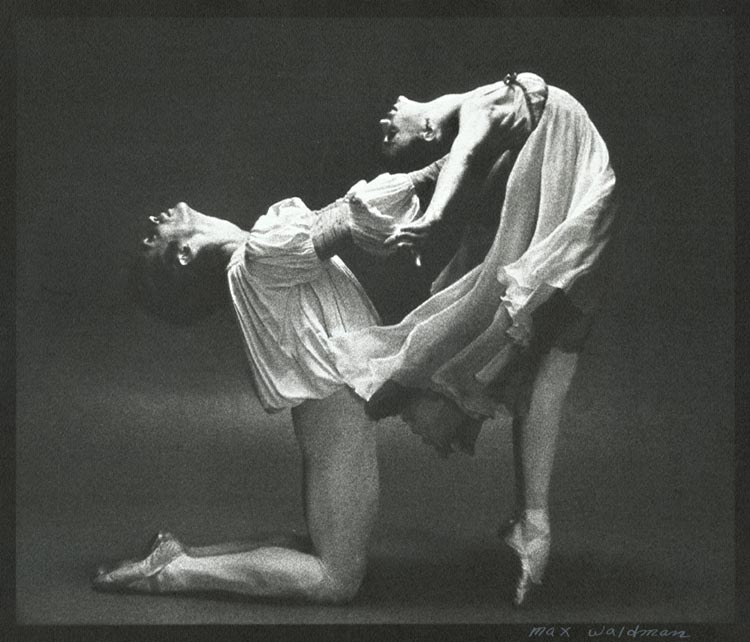
Gelsey Kirkland and Ivan Nagy in Romeo and Juliet Photograph by Max Walman
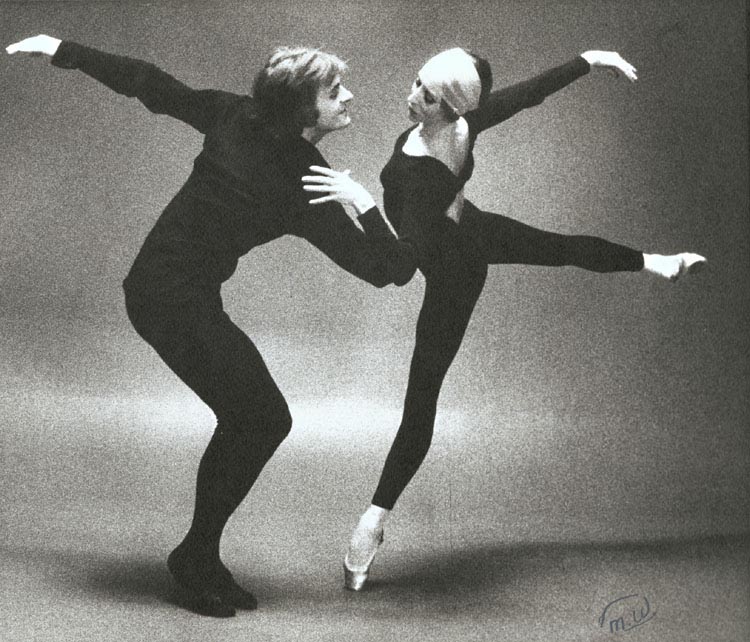
Natalia Makarova and Mikhail Baryshnikov rehearsal Photograph by Max Waldman
Although this photographic venture presented many frustrations, it was still an exceptional experience, and one that gave me an even deeper appreciation for a thing of great beauty—the technical genius and grand artistry of Max Waldman.
Tonight I pull my musty copy of Waldman On Dance from the shelf, flip through its thirty-six year old well-fingered pages. I re-read the beautiful introduction written by Clive Barnes, beloved dance critic for The New York Times: The pictures that follow need no words, They are a constant evocation of the harmonic elements of dance, and a constant reminder of what dance is all about—the fleeting images of remembered passion.
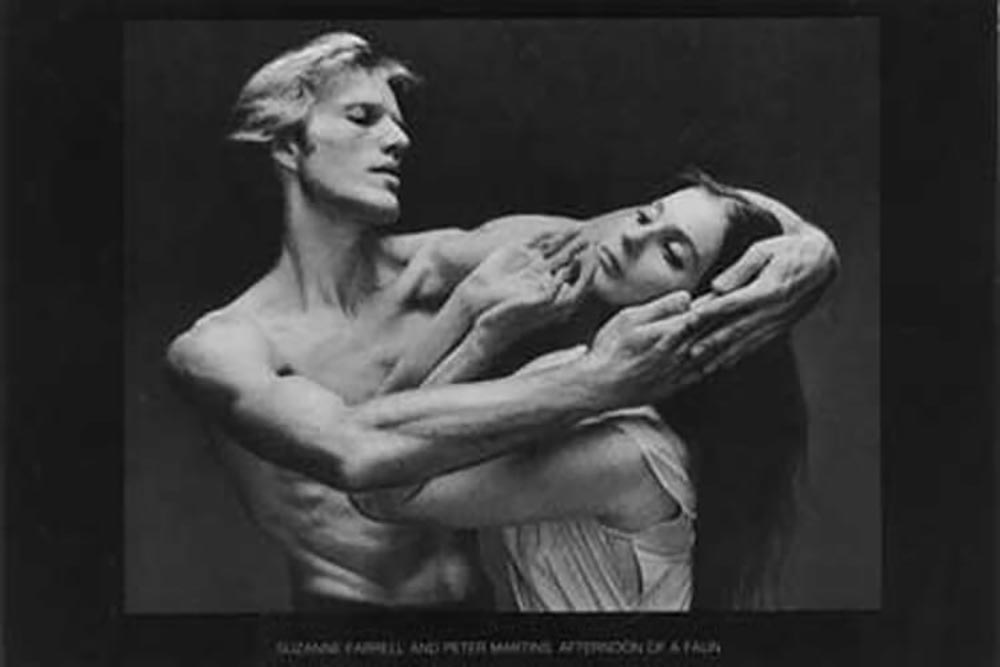
Suzanne Farrell and Peter Martins in Afternoon of a Faun Photograph by Max Waldman
Rachelle, I love the rich variety of what you offer from month to month. Thanks for these dance thoughts and the beautiful photos, illuminating an art I have had very little contact with over the years and appreciate very much now.
Thanks for reading, Sara. I’m glad you enjoyed it. I’m still in awe of Max Waldman’s images. ♥️